Marbella Neighbourhood Guide
Marbella is a coastal municipality between Málaga and Estepona, stretching from Cabopino in the east to Guadalmina in the west and including Puerto Banús, Nueva Andalucía and San Pedro de Alcántara. Housing ranges from seafront apartments near the centre to townhouses in urbanisations and villas on the hillside above the coast road, with stock from resort-era schemes to recent new build. Buyers and renters include international second-home owners, families resident year round, retirees and longer-term tenants. The old town around the Plaza de los Naranjos is walkable and a seafront path runs east and west from the centre; the airport is around an hour by motorway.
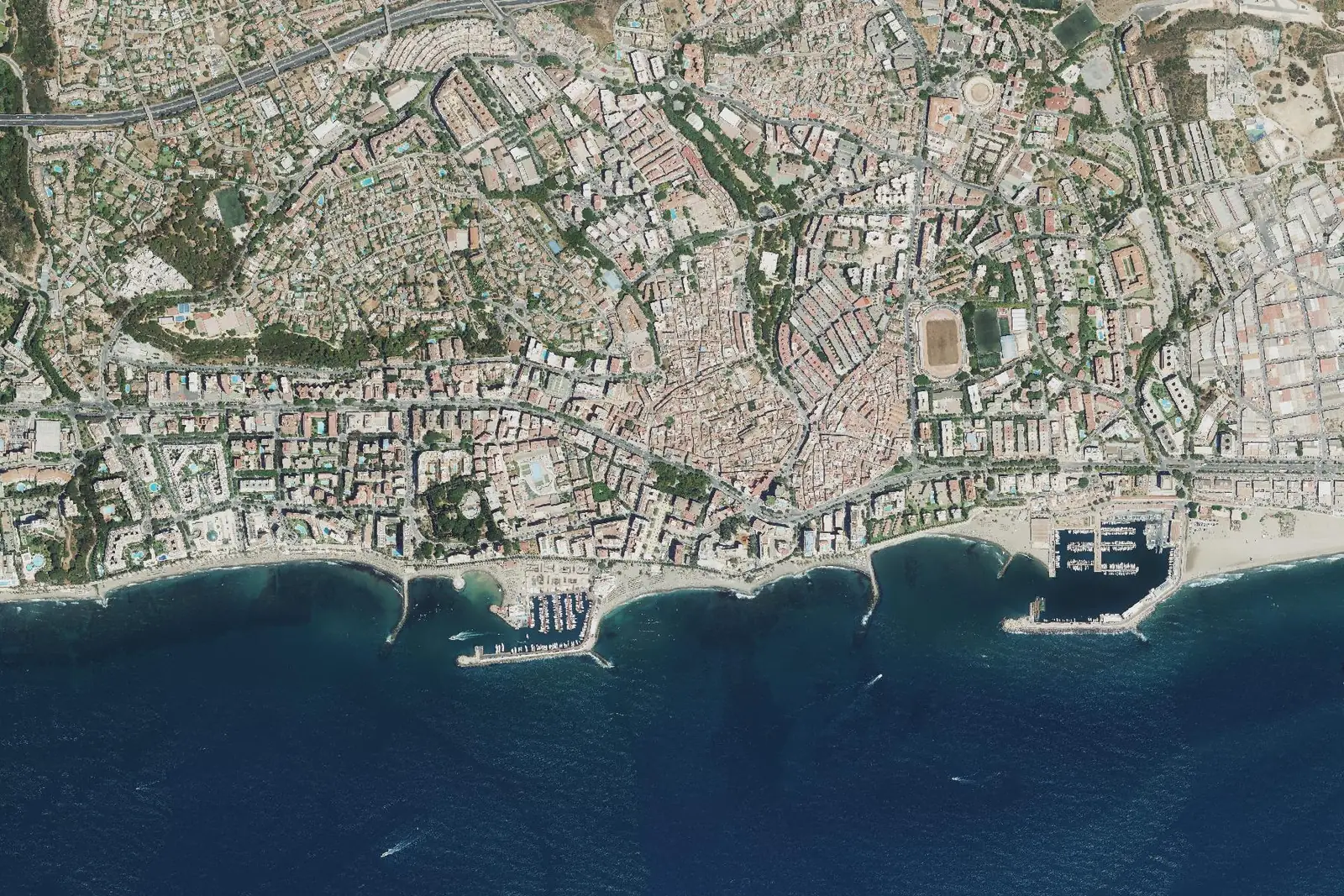
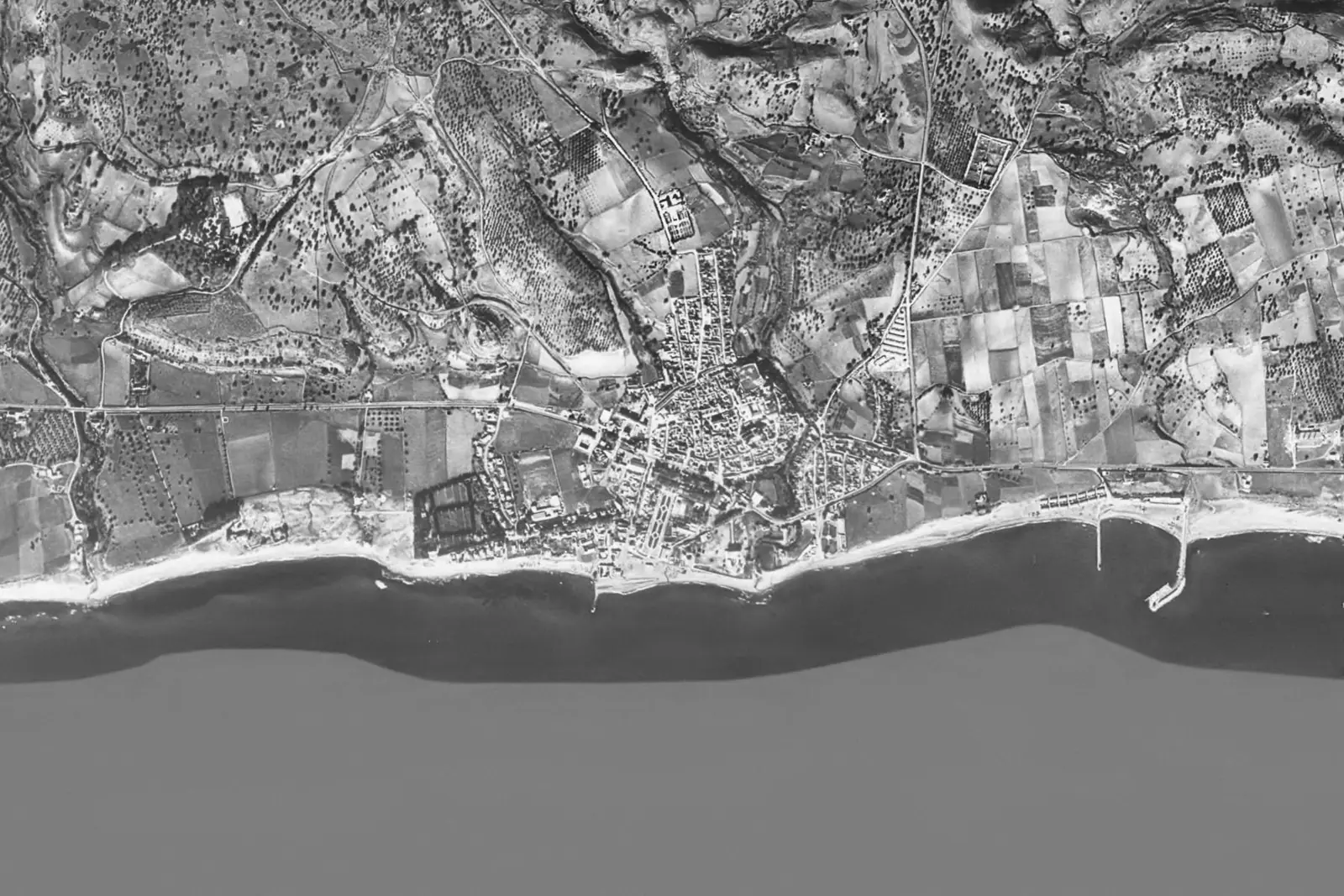
Marbella from the air, 1956 to 2022
The same 3.2 km across, photographed from the air 66 years apart. Drag the line to compare.
 19562022
Aerial photos: Vuelo Americano Serie B 1956-1957 and PNOA 2022, CC-BY 4.0 ign.es (Instituto Geográfico Nacional).
The market right now
Live counts and prices across every way to live in Marbella.
The "verified" €/m² is notary-verified by PropertyList Oracle. Consejo General del Notariado (Spanish notarial register), 3,941 transactions to 2026-09-03.
What is for sale
Homes for sale in Marbella by bedrooms.
Featured homes for sale
Live from the PropertyList MLS.
Who Marbella suits
Buyers
1,449 homes for sale, from €209k to €30M, median €1,395,000. Notary-verified value ≈ €4,695/m².
Long-term renters
328 long-term rentals available to browse right now in Marbella.
Holiday-makers
308 holiday properties available for short stays in Marbella.
What Marbella is really like
Marbella is a coastal municipality on the Costa del Sol located between Malaga and Estepona and stretching from Cabopino in the east to Guadalmina in the west. The administrative area includes the marina at Puerto Banus and the built neighbourhoods of Nueva Andalucia and San Pedro de Alcantara, with a clear line of development along the coast road. The old town around the Plaza de los Naranjos is a compact area that is walkable from the central seafront, and a paved promenade runs east and west from the town centre for local walking and cycling.
Housing stock covers homes that were built during the resort development era together with recent new build projects; there are apartments close to the centre and along the seafront, townhouses within the urbanisations behind the seafront, and villas positioned on the hillside above the main coastal road. The population includes international second home owners, families who live in the area year round, retirees and people on long term rental contracts. Summers are hot and the town is busier then, while hillside properties generally require a car for regular errands and school or work travel.
For buyers
Buyers will find a mix of apartment types, townhouse layouts and hillside villas that vary in age and construction quality, so surveys and a review of construction documentation are useful prior to committing. The live figures above give an immediate snapshot of asking levels; buyers should instruct a local lawyer to check title deeds, community rules and outstanding charges before exchange. Orientation and winter sun should be checked at each property because many purchasers value sheltered terraces for the cooler months.
Buyers considering rental income need to confirm whether a property has the required licence to be let to short stay holiday-makers, and should check community statutes for restrictions on holiday lets and pets. Parking provision varies by location so the presence of a dedicated parking space or garage is a material factor for resale and for family use. Where a property sits on the hillside above the main road, the need for a vehicle affects running costs and access to schools and services.
For long-term renters
Long-term rental stock tends to include apartments in and near the centre, family-sized townhouses in residential urbanisations, and detached villas on the hillsides above the coast road. Renters should confirm what is included in the contract such as utilities, community fees and the condition of fixtures so there are no unexpected charges during a tenancy. Tenancies often suit expatriate families who intend to live year round, and proximity to the old town or the seafront path is commonly prioritised for daily routines.
Prospective tenants should view any property at least twice, once midweek and once at the weekend, to assess traffic, noise and local activity levels. A short checklist of practical items to verify before signing can be helpful:
- Include confirmation of parking, storage and access to communal facilities in the contract
- Request copies of recent community fee receipts and minutes where applicable
- Check the heating arrangement and orientation for winter sunlight
- Ask what tenants must repair and what the landlord covers
For holiday-makers
Holiday visitors find accommodation types ranging from seafront apartments to villas on the hillsides; apartment locations close to the promenade are suited to short stays when beach access and restaurants are priorities. The seafront path allows continuous walking or cycling from the town centre in both directions, which makes day-to-day movement straightforward without a car for centrally located stays. Visitors who choose hillside villas should plan for regular car use to reach beaches, shops and local amenities.
Short stay lets require a licence in many parts of Spain and this applies to properties in Marbella where local regulation is enforced; booking platforms and agents should confirm licence status before payment is made. Holiday-makers should also check what is included in the rental price, such as linen, final cleaning and the availability of air conditioning for the hotter months.
Getting around and practical
The town has a central seafront axis and a compact old town that is walkable for routine shopping and dining from the Plaza de los Naranjos area. The main coastal road provides an east-west route along the municipality and links with the A-7 and the AP-7 for longer journeys by car. Public transport links and local bus services connect neighbourhoods but routes and frequencies vary, so people who rely on regular cross-municipality travel should check timetables.
The nearest airport is reachable via the motorway in about an hour by car under normal traffic conditions, which is a common consideration for second home owners and frequent travellers. Local services such as supermarkets, health centres and schools are concentrated around the central and suburban nuclei, so property choice affects daily convenience for families and retirees.
Frequently asked questions
Is Marbella safe?
Reported levels of petty crime follow the pattern of many coastal towns and visitors and residents most commonly encounter minor theft in crowded areas; central neighbourhoods and the seafront are generally well policed and residential developments often have community security arrangements.
What language is spoken in Marbella?
Spanish is the official language and widely used in shops and public services, while English and other European languages are commonly heard in tourist areas and among international residents and service providers.
What is the climate like in Marbella?
The climate is Mediterranean with hot summers and mild winters, which affects sun exposure on terraces and the seasonal demand for air conditioning and heating in properties.